
Black Mold Removal in Marietta, GA
Dark staining on drywall, framing or subfloor almost always means a moisture source has been feeding growth for weeks. We contain the area, remove what cannot be cleaned, and shut off the water that caused it.
What is black mold removal?
Black mold removal is the containment, physical removal and HEPA filtration of heavily colonised building materials, followed by correction of the moisture source. In Marietta homes it usually appears on damp drywall, framing and subfloor after a plumbing leak, roof leak or long-running humidity problem. Removal without moisture correction fails.
The term black mold is used by property owners to describe dark, often slimy colonisation on gypsum board, structural wood, insulation facing and carpet backing. From a remediation standpoint the colour of the growth does not change the method. What changes the method is how porous the affected material is, how large the area is, and whether the water intrusion that created it is still active.
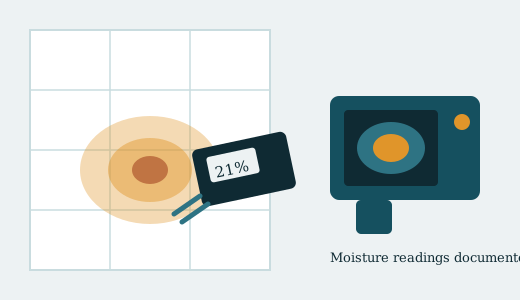
Our scope starts with the water. A water damage mold removal inspection traces the moisture back to its source — a supply line, a drain, a failed roof flashing, a foundation crack, or condensation on cold surfaces. We document moisture content readings on affected and unaffected materials so there is a defensible baseline before anything is cut out.
Porous, visibly colonised material is removed rather than cleaned. Semi-porous structural wood is usually cleaned, abraded where needed, HEPA vacuumed and treated with an EPA-registered antimicrobial. Non-porous surfaces are cleaned and verified. Everything leaves the property through sealed, double-bagged routes so spores are not redistributed into clean rooms.
Signs you need black mold removal
- Dark grey, green or near-black patches spreading on drywall or ceiling board
- A persistent damp, earthy smell that returns after cleaning
- Staining that reappears within weeks of being painted over
- Visible growth at the base of walls after a plumbing or appliance leak
- Soft, spongy drywall or trim that crumbles under finger pressure
- Respiratory irritation that eases when occupants leave the property
How we handle black mold removal in Marietta
Moisture investigation
Meters, thermal scanning and cavity probing identify the water source and map the true extent behind finishes.
Containment build
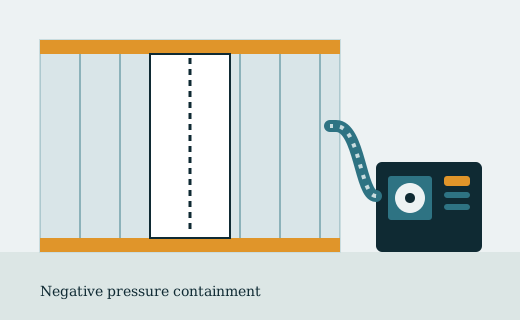
Polyethylene barriers, zipper access and negative air pressure isolate the work area from occupied rooms.
Controlled demolition
Colonised porous material is cut back to sound substrate along documented lines and bagged inside containment.
Surface remediation
Structural wood is HEPA vacuumed, abraded where required and treated with an EPA-registered antimicrobial.
Air scrubbing and clearance
HEPA filtration runs through final cleaning, then moisture readings and a visual inspection confirm the area is dry and clean.
What gets removed and what gets saved
| Material | Typical outcome | Reason |
|---|---|---|
| Drywall and gypsum board | Removed | Paper facing is porous and feeds growth through the sheet, not just the surface. |
| Structural framing | Cleaned and treated | Dense wood supports surface growth that can be abraded and HEPA vacuumed. |
| Fibreglass insulation | Removed | Fibrous batts trap spores and moisture and cannot be reliably cleaned. |
| Tile, glass and sealed metal | Cleaned | Non-porous surfaces release contamination fully under detergent cleaning. |
Moisture source correction is part of the scope
Every project includes identifying the water that caused the growth. Remediating colonised material without correcting the source produces a clean property that fails again in the same place. Where the correction falls to another trade, we document it precisely so the sequence is right.
Black Mold Removal cost in Marietta
Ranges below reflect typical completed projects. Final pricing is confirmed after an on-site evaluation and a conversation about scope.
Single contained area
$800 – $2,200
Typical project range
- One room or wall assembly
- Containment and HEPA filtration
- Material removal and antimicrobial treatment
- Moisture verification
Multi-room colonisation
$2,200 – $4,200
Typical project range
- Two to four adjoining areas
- Negative air machines and ducting
- Cavity drying and monitoring
- Daily moisture logging
Structural / whole-level
$4,200 – $6,500
Typical project range
- Extensive framing and subfloor exposure
- Phased containment zones
- Insulation and flooring removal
- Full clearance documentation
These are ranges, not quotes. The figure for your property depends on the affected area, how many assemblies are involved, the material types present, how long the moisture has been active and the drying time the structure requires. We give you a firm number after we have walked the property and taken readings.
Black Mold Removal questions
Can black mold be cleaned off drywall instead of removed?
Surface cleaning leaves the paper facing and gypsum core contaminated, because growth penetrates the sheet rather than sitting on it. Visibly colonised drywall is cut back to sound material. Painted-over staining is the most common reason a property owner calls us a second time.
How long does black mold removal take in a typical Marietta home?
A single contained bathroom or bedroom wall is usually complete in one to two working days. Multi-room or structural work runs three to six days, with drying equipment often remaining in place for an additional two to four days until moisture content readings stabilise.
Do occupants need to leave the property during removal?
Most residential projects proceed with the family in place, because negative pressure containment keeps the work area isolated. We recommend temporary relocation when containment must cross a main hallway, when HVAC supply has to be shut down, or when an occupant has a diagnosed respiratory condition.
Will the mold return after removal?
Only if the moisture source returns. Every project includes identifying and correcting the water intrusion that fed the growth. Where the source is outside our scope, such as a buried supply line, we document it clearly so the right trade can resolve it before finishes go back.
Related mold services
Moisture problems rarely stay inside one assembly. These are the services most often carried out alongside black mold removal.
- Wall Mold RemovalWhat shows on the painted face is the smallest part of the problem. The stud bay behind it h…
- Drywall Mold RemovalDrywall is paper on both faces of a gypsum core. Paper is food and gypsum holds water, which…
- Water Damage Mold RemovalMold after water damage is a timing failure, not bad luck. Material that stays wet past roug…
- Mold Odor RemovalA musty smell is information. It means an active or recently active colony is giving off mic…
View all 20 mold remediation services
Get a firm figure for your property
We walk the affected areas, take moisture readings and give you a written scope with pricing before any work begins.