
Water Damage Mold Removal in Marietta, GA
Mold after water damage is a timing failure, not bad luck. Material that stays wet past roughly forty-eight hours in Georgia conditions will colonise, no matter how clean the water was when it arrived.
What is water damage mold removal?
Water damage mold removal combines water extraction, structural drying and mold remediation into one sequence. It applies when a burst pipe, appliance failure, roof leak or supply line break has left building materials wet long enough for growth to establish. Work covers extraction, material removal, antimicrobial treatment, dehumidification and documented verification.
There are two distinct jobs here and they run in a specific order. First the water has to stop and come out: source isolation, standing water extraction, and removal of material that is holding water and cannot be dried. Second, the material that has already been colonised has to be remediated under containment. Running these out of order, or treating the second without completing the first, produces a property that looks finished and smells wrong a month later.
The water category matters. Clean supply water from a burst line is the most forgiving. Water that has passed through building materials picks up contamination as it travels. Water from a drain, a ground source or a sewer line is handled under a different protocol entirely, with more aggressive removal thresholds and no salvage of porous material.
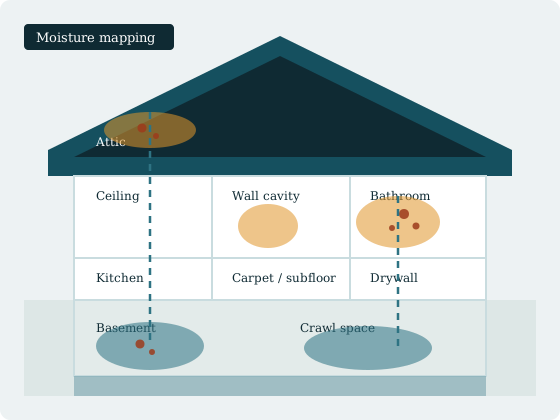
Our drying is measured rather than assumed. Moisture content readings on affected materials are compared against an unaffected reference area in the same building and logged daily. Equipment stays until those readings converge. That record is also what makes the project straightforward if you are coordinating with an insurance carrier, since documentation of the loss, the readings and the scope is part of the deliverable.
Signs you need water damage mold removal
- A musty smell developing within days of a leak or flood event
- Staining spreading outward from where water entered
- Flooring that has cupped, lifted or separated at the seams
- Baseboard or drywall darkening along the floor line
- Rooms that feel humid or clammy compared with the rest of the house
- A previous water event that was dried with household fans only
How we handle water damage mold removal in Marietta
Source isolation and extraction
The water source is isolated and standing water is removed with portable and truck-mounted extraction equipment.
Loss documentation
Moisture readings, affected-area mapping and photographic evidence are recorded before any material is removed.
Material removal under containment
Saturated porous material that cannot be dried is removed inside sealed containment and bagged out.
Antimicrobial treatment
Water-affected surfaces and framing are HEPA vacuumed and treated with EPA-registered products.
Structural drying and monitoring
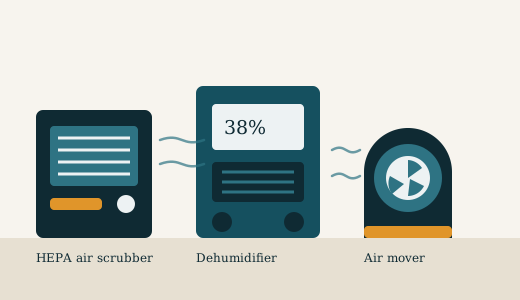
Air movers and dehumidifiers run with daily moisture logging until affected materials reach documented dry standard.
What gets removed and what gets saved
| Material | Typical outcome | Reason |
|---|---|---|
| Standing water | Extracted immediately | Every hour of standing water widens the affected area through wicking. |
| Saturated drywall and insulation | Removed | Neither can be reliably dried in place once fully wet. |
| Structural framing and subfloor | Dried and treated | Dense materials recover when dried quickly and verified. |
| Hard flooring and tile | Assessed individually | Depends on substrate, adhesive and whether water reached the underside. |
Moisture source correction is part of the scope
Every project includes identifying the water that caused the growth. Remediating colonised material without correcting the source produces a clean property that fails again in the same place. Where the correction falls to another trade, we document it precisely so the sequence is right.
Water Damage Mold Removal cost in Marietta
Ranges below reflect typical completed projects. Final pricing is confirmed after an on-site evaluation and a conversation about scope.
Single-room loss
$1,200 – $2,800
Typical project range
- One room affected
- Extraction and drying
- Targeted material removal
- Moisture verification
Multi-room loss
$2,800 – $5,600
Typical project range
- Water migration across rooms
- Multiple drying units
- Containment and remediation
- Daily moisture logging
Whole-property loss
$5,600 – $8,500
Typical project range
- Extensive migration or multiple levels
- Phased containment
- Structural drying
- Full documentation package
These are ranges, not quotes. The figure for your property depends on the affected area, how many assemblies are involved, the material types present, how long the moisture has been active and the drying time the structure requires. We give you a firm number after we have walked the property and taken readings.
Water Damage Mold Removal questions
How quickly does mold grow after water damage?
Under typical Georgia indoor temperature and humidity, growth can establish on wet porous material within twenty-four to forty-eight hours. That window is the single reason response speed matters more than any other factor in the outcome of a water loss.
The water was clean, so is mold still a risk?
Yes. Clean water becomes a growth risk the moment it sits in a porous material, because the nutrient source is the material itself, not the water. Clean-water losses are more salvageable than contaminated ones, but they still colonise if the drying is incomplete or delayed.
I dried it with fans — do I still need an inspection?
It is worth checking. Household fans move surface air but do not remove moisture from the room or reach inside wall cavities and under flooring. Material can read dry on the surface while the cavity behind it remains wet. A meter survey answers the question in under an hour without any demolition.
Do you document the loss for an insurance claim?
Yes. We record moisture readings, affected-area mapping, photographic evidence and a written scope of work as a matter of course, and we coordinate directly with your carrier or adjuster. Coverage decisions rest with your insurer and depend on your policy wording and the circumstances of the loss.
Related mold services
Moisture problems rarely stay inside one assembly. These are the services most often carried out alongside water damage mold removal.
- Flood Mold RemediationFloodwater is not clean water that happened to arrive in volume. It carries soil, fertiliser…
- Post-Flood Mold CleanupThis is the job that starts after the water has gone and the growth has already taken hold. …
- Moisture Mold RemediationSome properties never had a leak. Growth appears because indoor humidity sits too high for t…
- Black Mold RemovalDark staining on drywall, framing or subfloor almost always means a moisture source has been…
View all 20 mold remediation services
Get a firm figure for your property
We walk the affected areas, take moisture readings and give you a written scope with pricing before any work begins.