
Flood Mold Remediation in Marietta, GA
Floodwater is not clean water that happened to arrive in volume. It carries soil, fertiliser, fuel residue and whatever was in the storm drain, and it is treated as contaminated from the moment it enters the structure.
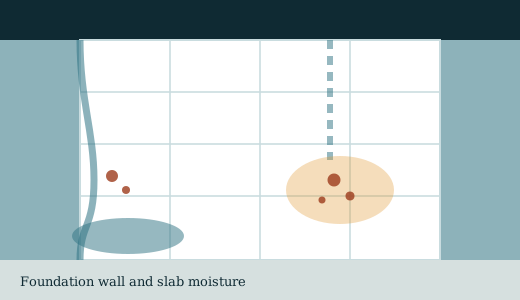
What is flood mold remediation?
Flood mold remediation treats growth following floodwater intrusion from storm runoff, creek overflow or groundwater. Floodwater is classified as grossly contaminated, so porous materials it contacted are removed rather than dried. Work includes removal, decontamination of structural surfaces, aggressive drying and documented verification before rebuilding.
Marietta sits in a watershed where intense summer storms can put more water into a property in two hours than a drainage system was designed to carry in a day. When that water enters a structure it brings whatever it collected on the way: soil, lawn chemical residue, driveway runoff, and anything the storm drain was carrying. That classification drives everything about the scope.
Under contaminated-water protocol, porous material that the water contacted is removed, not dried. Drywall comes out above the tide line, insulation comes out, carpet and pad come out, and particleboard-based furnishings and cabinetry are assessed with a strong presumption toward removal. Semi-porous and non-porous surfaces — framing, masonry, concrete, metal, sealed tile — are cleaned, decontaminated and dried.
Timing compounds the problem. Flood events usually happen when access is restricted and multiple properties are affected simultaneously, which means material frequently sits wet longer than it would in an isolated plumbing loss. If several days have passed, the project moves into post-flood mold cleanup, where growth is already established rather than anticipated.
Signs you need flood mold remediation
- A visible tide line on walls marking the height floodwater reached
- Silt, grit or debris residue on floors and in corners
- Strong earthy or sour odour throughout a lower level
- Buckled flooring and swollen baseboard across whole rooms
- Growth appearing on wall surfaces within days of the event
- Standing water remaining in a crawl space or basement after the event
How we handle flood mold remediation in Marietta
Contamination classification
The water source and tide line are documented, and the affected zone is classified so removal thresholds are set correctly.
Extraction and gross removal
Standing water and silt are extracted, and grossly contaminated porous material is removed first to reduce load.
Full containment remediation
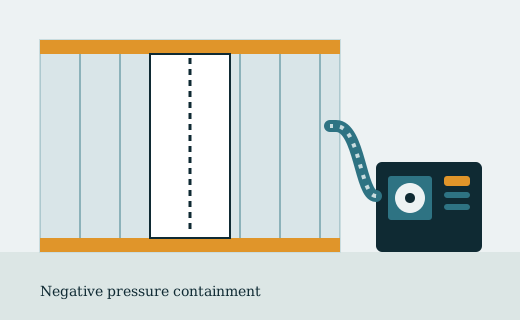
Remaining affected porous material is removed inside containment under negative pressure and bagged out.
Decontamination of structure
Framing, masonry, slab and sealed surfaces are cleaned and treated with EPA-registered antimicrobials.
Aggressive drying and clearance
High-capacity dehumidification and directed airflow dry the structure with daily logging to documented targets.
What gets removed and what gets saved
| Material | Typical outcome | Reason |
|---|---|---|
| Drywall below tide line | Removed above the line | Contaminated water wicks upward well beyond the visible mark. |
| Insulation, carpet and pad | Removed | Porous materials cannot be decontaminated once grossly contaminated. |
| Framing, masonry and slab | Cleaned and decontaminated | Semi-porous and non-porous surfaces respond to cleaning and treatment. |
| Particleboard cabinetry and furnishings | Strong presumption to remove | Compressed wood products absorb contaminated water and never fully release it. |
Moisture source correction is part of the scope
Every project includes identifying the water that caused the growth. Remediating colonised material without correcting the source produces a clean property that fails again in the same place. Where the correction falls to another trade, we document it precisely so the sequence is right.
Flood Mold Remediation cost in Marietta
Ranges below reflect typical completed projects. Final pricing is confirmed after an on-site evaluation and a conversation about scope.
Single-level intrusion
$2,000 – $4,800
Typical project range
- One level affected
- Extraction and gross removal
- Containment remediation
- Structural drying
Extensive flood damage
$4,800 – $8,600
Typical project range
- Multiple areas or levels
- Full porous removal
- Decontamination of structure
- Extended drying and logging
Major flood event
$8,600 – $12,000
Typical project range
- Whole-property contamination
- Phased containment zones
- Complete material removal
- Full documentation package
These are ranges, not quotes. The figure for your property depends on the affected area, how many assemblies are involved, the material types present, how long the moisture has been active and the drying time the structure requires. We give you a firm number after we have walked the property and taken readings.
Flood Mold Remediation questions
Why is floodwater treated differently from a burst pipe?
A burst supply line delivers potable water. Floodwater has travelled across ground, roadway or drainage infrastructure and carries soil, chemical residue and biological contamination. Industry practice classifies it as grossly contaminated, which means porous materials it touched are removed rather than dried and salvaged.
How far above the waterline does material have to be removed?
Beyond the visible tide line, because gypsum wicks water vertically well past the point the water physically reached. The exact height is set by meter readings taken above the line, and is typically a defined margin cut at a consistent height so the repair is clean.
Can anything be saved after a flood?
Yes — structural framing, masonry, concrete, metal, solid wood and sealed non-porous finishes are routinely cleaned, decontaminated and retained. What does not survive is the porous category: drywall, insulation, carpet, pad and compressed wood products. We assess item by item rather than clearing a room by default.
How long does a flood remediation project take?
Removal and decontamination of a single affected level typically takes three to five working days, with drying equipment remaining a further three to seven days depending on how much masonry and structural wood absorbed water. Larger events run longer and we give you a phased schedule up front.
Related mold services
Moisture problems rarely stay inside one assembly. These are the services most often carried out alongside flood mold remediation.
- Post-Flood Mold CleanupThis is the job that starts after the water has gone and the growth has already taken hold. …
- Wet Basement Mold RemovalAn actively wet basement is a different job from a damp one. Water is still arriving, so ext…
- Storm Damage Mold RemediationA storm gets water into the building envelope in ways a plumbing leak never does — sideways …
- Sewage Mold RemediationA sewer backup is a biological hazard before it is a mold problem. The removal thresholds ar…
View all 20 mold remediation services
Get a firm figure for your property
We walk the affected areas, take moisture readings and give you a written scope with pricing before any work begins.