
Moldy Flooring Removal in Marietta, GA
Flooring failure is a layered problem. The finish surface, the underlayment, the adhesive and the subfloor each respond differently to water, and the subfloor decides whether the room can be dried in place.
What is moldy flooring removal?
Moldy flooring removal covers hardwood, engineered wood, laminate, luxury vinyl plank, tile and the subfloor beneath them. Material selection drives the outcome: laminate and LVP rarely survive core saturation, hardwood depends on duration, and tile often survives. The subfloor is treated, dried and verified before replacement flooring is installed.
Every flooring type fails differently and that determines the scope. Laminate has a fibreboard core that swells irreversibly on contact with water and traps moisture against the subfloor underneath. Luxury vinyl plank is waterproof on the surface but the seams let water through to the substrate, where it sits with nowhere to evaporate. Engineered wood survives brief wetting but delaminates at the veneer when exposure is prolonged.
Solid hardwood is the most salvageable and the most time-sensitive. Caught early, cupped boards can often be dried in place with specialised mat systems that pull moisture up through the wood, then sanded flat and refinished. Left longer, the boards crown, the adhesive or fasteners fail, and growth establishes on the underside where the finish never protected them.
Tile set in a mortar bed on a concrete slab usually survives entirely, because neither material is an organic nutrient source. The problem in that assembly is what is beneath or beside it — the sill plate, the adjacent drywall, or an underlayment membrane that has trapped water. Our assessment is per-assembly rather than per-room.
Signs you need moldy flooring removal
- Cupping, crowning or buckling across a hardwood floor
- Laminate or LVP seams that have lifted, swollen or separated
- Dark staining emerging through or around floor boards
- Soft or springy spots underfoot in a specific area
- A musty smell released when walking across the floor
- Grout cracking or tiles sounding hollow when tapped
How we handle moldy flooring removal in Marietta
Assembly assessment
Finish, underlayment, adhesive and subfloor are each assessed, with readings taken through seams into the substrate.
Salvage decision
We identify what can be dried in place against what has to be removed, before any demolition begins.
Containment and removal
Non-salvageable flooring and underlayment are removed inside containment and bagged for disposal.
Subfloor remediation
Plywood or OSB is HEPA vacuumed and treated, with delaminated or swollen sections cut out and replaced.
Drying and verification
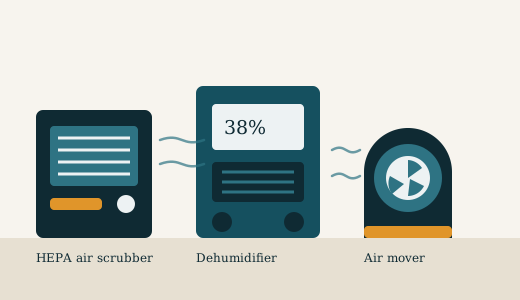
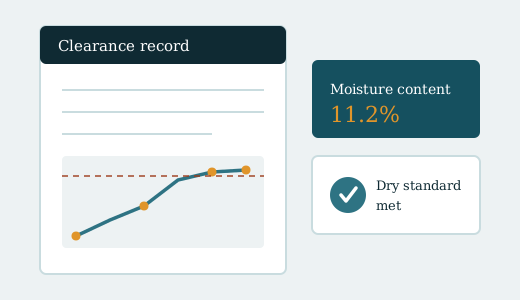
Directed airflow and dehumidification dry the subfloor to documented targets before replacement flooring is scheduled.
What gets removed and what gets saved
| Material | Typical outcome | Reason |
|---|---|---|
| Laminate | Removed | Fibreboard core swells irreversibly and holds moisture against the subfloor. |
| Luxury vinyl plank | Usually removed | Surface is waterproof but seams admit water that cannot evaporate beneath. |
| Solid hardwood | Often salvageable if caught early | Specialised mat drying can recover cupped boards before crowning sets in. |
| Tile on slab or mortar bed | Usually retained | Neither tile nor mortar is an organic nutrient source. |
Moisture source correction is part of the scope
Every project includes identifying the water that caused the growth. Remediating colonised material without correcting the source produces a clean property that fails again in the same place. Where the correction falls to another trade, we document it precisely so the sequence is right.
Moldy Flooring Removal cost in Marietta
Ranges below reflect typical completed projects. Final pricing is confirmed after an on-site evaluation and a conversation about scope.
Single room
$1,100 – $2,400
Typical project range
- One room flooring
- Containment and removal
- Subfloor treatment
- Drying
Multiple rooms
$2,400 – $4,600
Typical project range
- Water migration across rooms
- Underlayment removal
- Partial subfloor replacement
- Moisture logging
Whole level
$4,600 – $7,000
Typical project range
- Full floor level
- Extended subfloor work
- Hardwood salvage drying
- Full verification
These are ranges, not quotes. The figure for your property depends on the affected area, how many assemblies are involved, the material types present, how long the moisture has been active and the drying time the structure requires. We give you a firm number after we have walked the property and taken readings.
Moldy Flooring Removal questions
Can cupped hardwood be saved?
Often, if we reach it early. Specialised drying mat systems draw moisture up through the boards and out, which can return a cupped floor to flat for sanding and refinishing. Once boards have crowned or the fasteners have released, salvage is no longer realistic and replacement is the better outcome.
Why does luxury vinyl plank have to come out if it is waterproof?
The plank itself is waterproof; the assembly is not. Water passes through the seams, reaches the subfloor, and then has no evaporation path because the waterproof surface above seals it in. That makes LVP one of the worst performers for drying in place despite its marketing.
Is tile flooring always safe after water damage?
The tile and mortar usually are, since neither feeds growth. The risk sits around and beneath them: the adjacent wall base, the sill plate, or a trapped membrane layer. We check those specifically rather than clearing the room because the tile looks fine.
How long before I can install new flooring?
Once the subfloor reaches its documented moisture target, which is typically three to seven days of drying depending on how much water the substrate absorbed. Installing over a subfloor that has not been verified dry traps moisture under the new floor and reproduces the problem within months.
Related mold services
Moisture problems rarely stay inside one assembly. These are the services most often carried out alongside moldy flooring removal.
- Carpet Mold RemovalThe carpet is rarely the real issue. The pad underneath holds several times its weight in wa…
- Water Damage Mold RemovalMold after water damage is a timing failure, not bad luck. Material that stays wet past roug…
- Kitchen Mold RemovalKitchen growth is almost always slow leak damage. A dishwasher gasket, a refrigerator water …
- Post-Flood Mold CleanupThis is the job that starts after the water has gone and the growth has already taken hold. …
View all 20 mold remediation services
Get a firm figure for your property
We walk the affected areas, take moisture readings and give you a written scope with pricing before any work begins.