
Moldy Insulation Removal in Marietta, GA
Insulation is fibrous, porous and sits exactly where moisture collects. Once it has been wet it holds spores permanently, and no cleaning process can verify it as clean.
What is moldy insulation removal?
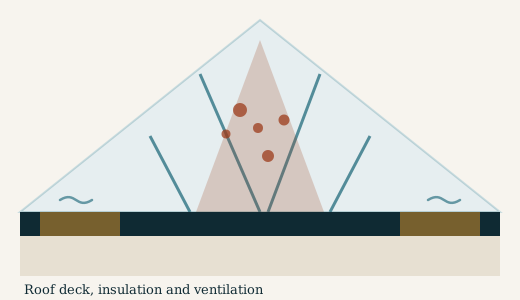
Moldy insulation removal covers contaminated fibreglass batt, blown-in cellulose, mineral wool and duct lining in attics, crawl spaces, wall cavities and mechanical systems. Contaminated insulation is removed rather than cleaned because fibrous material cannot be verified clean. Removal is performed under containment with HEPA filtration, followed by substrate treatment.
Insulation is the material we remove most often and argue about least. Fibreglass batt, blown cellulose and mineral wool are all open fibrous assemblies with enormous internal surface area. Once wet, they hold moisture against whatever they are touching, they conceal the condition of the substrate, and there is no process that can establish they are clean afterward. Removal is the only defensible outcome.
Where it is found determines the method. Attic blown insulation is vacuumed out through a sealed hose into a filtered collection unit so it is never carried through the house. Crawl space batts are bagged in place and removed through a sealed exterior route. Wall cavity insulation comes out with the drywall. Duct lining and flex duct interiors are a separate category, because contaminated lining distributes spores into every room the system serves.
Removal is not the end of the job. The substrate underneath is why the insulation got wet in the first place. Roof deck, joists, subfloor or framing are inspected, HEPA vacuumed and treated after removal, and the moisture source is identified before any replacement insulation is considered. Reinstalling into a wet assembly simply restarts the clock.
Signs you need moldy insulation removal
- Insulation that is compressed, darkened, clumped or discoloured
- Batts that have fallen out of crawl space joist bays
- A musty smell coming from attic access, registers or recessed lights
- Visible growth on the kraft paper facing of batt insulation
- Blown attic insulation with a crusted or matted surface
- Rodent activity alongside damp insulation
How we handle moldy insulation removal in Marietta
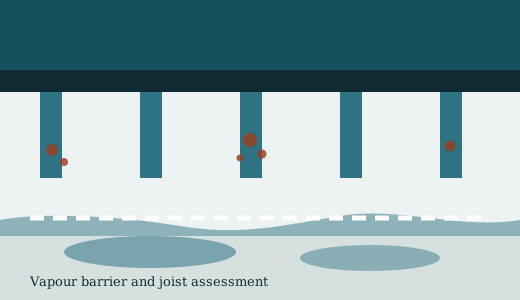
Extent and substrate assessment
We determine how much insulation is affected and what condition the deck, joists or framing beneath it are in.
Sealed containment
Access points and mechanical penetrations are sealed and negative air is established before any disturbance.
Controlled extraction
Blown material is vacuumed into filtered collection; batts are bagged in place and routed out without crossing clean space.
Substrate remediation
Exposed deck, joists, framing or cavity surfaces are HEPA vacuumed and treated with EPA-registered antimicrobials.
Moisture source correction
The leak, condensation path or ventilation fault that wet the insulation is identified and documented before replacement.
What gets removed and what gets saved
| Material | Typical outcome | Reason |
|---|---|---|
| Fibreglass batt | Removed | Fibrous assembly holds spores and moisture with no verifiable cleaning method. |
| Blown-in cellulose | Removed | Cellulose is both a nutrient source and highly absorbent once wet. |
| Mineral wool | Removed where contaminated | More water resistant than fibreglass but still unverifiable once colonised. |
| Rigid foam board | Often cleanable | Closed-cell foam is non-absorbent and surface growth can be removed. |
Moisture source correction is part of the scope
Every project includes identifying the water that caused the growth. Remediating colonised material without correcting the source produces a clean property that fails again in the same place. Where the correction falls to another trade, we document it precisely so the sequence is right.
Moldy Insulation Removal cost in Marietta
Ranges below reflect typical completed projects. Final pricing is confirmed after an on-site evaluation and a conversation about scope.
Targeted removal
$900 – $2,000
Typical project range
- Single area or crawl section
- Containment and HEPA filtration
- Bagged removal
- Substrate treatment
Full attic or crawl space
$2,000 – $3,900
Typical project range
- Complete insulation removal
- Vacuum extraction
- Deck or joist remediation
- Source assessment
Multi-area with duct work
$3,900 – $5,500
Typical project range
- Attic, crawl and cavity insulation
- Duct lining assessment
- Extensive substrate treatment
- Full verification
These are ranges, not quotes. The figure for your property depends on the affected area, how many assemblies are involved, the material types present, how long the moisture has been active and the drying time the structure requires. We give you a firm number after we have walked the property and taken readings.
Moldy Insulation Removal questions
Can wet insulation just be dried out and reused?
No. Even after drying, fibreglass and cellulose have been compressed by water weight and have lost loft, which permanently reduces thermal performance. More importantly, there is no way to verify a fibrous material is free of spore load. It is a low-cost material and replacing it is always the better economics.
Does removing attic insulation make the house hotter?
Temporarily, yes, until replacement is installed. We sequence work so the attic is not left bare longer than necessary, and we tell you up front what the gap will be. The alternative — leaving contaminated insulation that is also underperforming thermally — costs more over any reasonable period.
Is contaminated duct insulation a separate problem?
Yes, and a more urgent one. Lining inside supply ductwork distributes particulate into every room the system serves whenever it runs. Where we find it, we recommend assessing the full system rather than treating a single run, and we identify the condensation source that wet it.
Who installs the new insulation?
Replacement insulation is typically installed by an insulation contractor after our remediation and verification are complete. We make sure the substrate is dry and documented first, because installing into an assembly that has not been verified dry restarts the same problem.
Related mold services
Moisture problems rarely stay inside one assembly. These are the services most often carried out alongside moldy insulation removal.
- Attic Mold RemediationDark sheathing on the north slope of a roof deck is a ventilation and warm-air problem, not …
- Crawl Space Mold RemovalAir in a vented crawl space moves upward into the living space. Growth on joists and subfloo…
- Wall Mold RemovalWhat shows on the painted face is the smallest part of the problem. The stud bay behind it h…
- Moisture Mold RemediationSome properties never had a leak. Growth appears because indoor humidity sits too high for t…
View all 20 mold remediation services
Get a firm figure for your property
We walk the affected areas, take moisture readings and give you a written scope with pricing before any work begins.